Research

I study how injury, expectation, learning and social context shape pain, from individual behaviour to brain-wide activity and defined neural circuits.

My work is organised around three connected research programmes. Each asks how pain is altered by experience or biology, while approaching that question from a different experimental perspective.

Together, they link rodent and human experiments, social behaviour, longitudinal pain phenotyping, brain-wide mapping and targeted circuit-level questions.

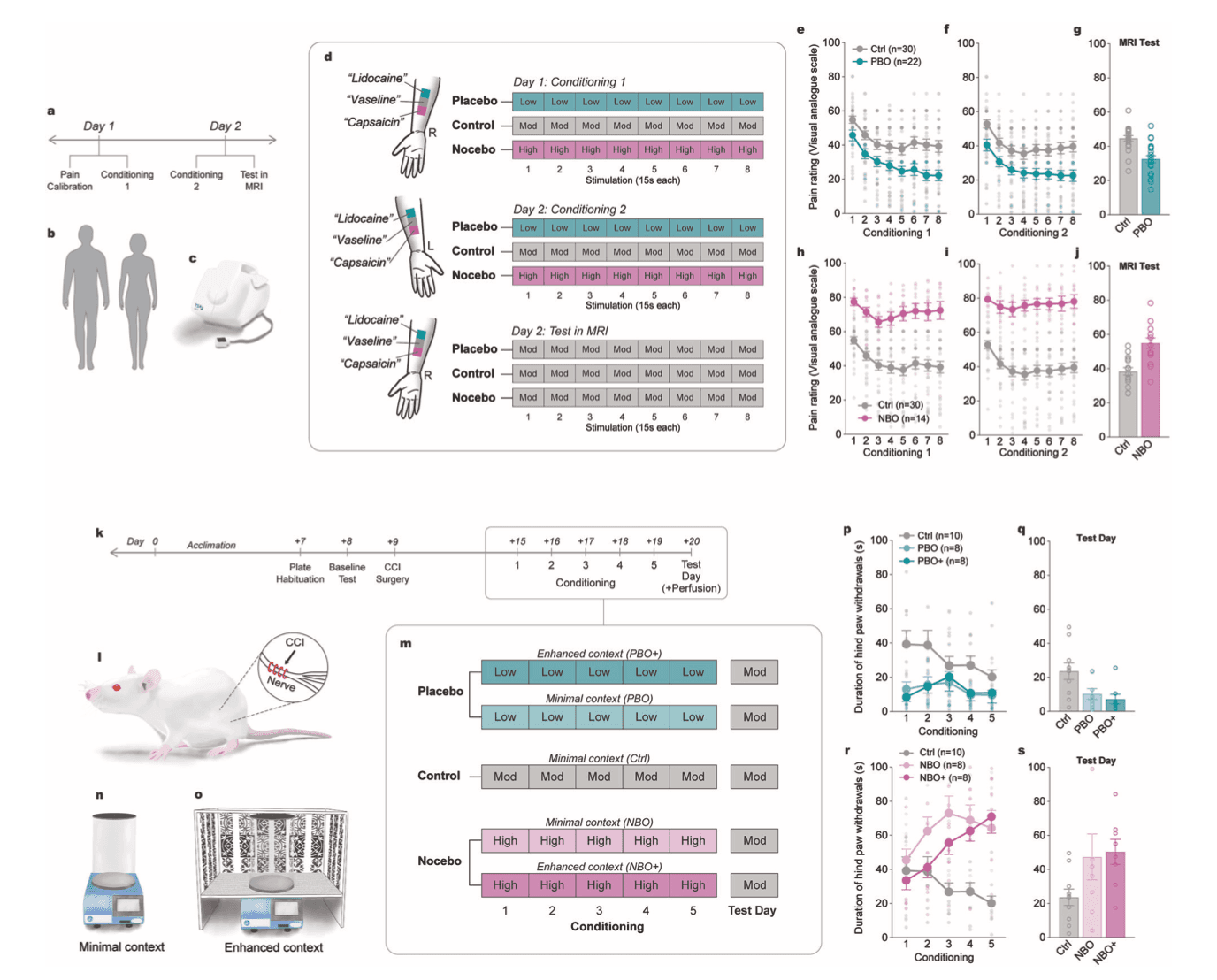
Experimental designs and results comparing placebo and nocebo conditioning in humans and rats

Expectation, learning and context

Placebo & Nocebo Across Species

I study how expectations, learning and context alter pain, using complementary experiments in rodents and humans. A major goal is to identify the neural mechanisms that are conserved across species — and where they differ.

How do expectation, learning and context change pain?

Explore this research programme
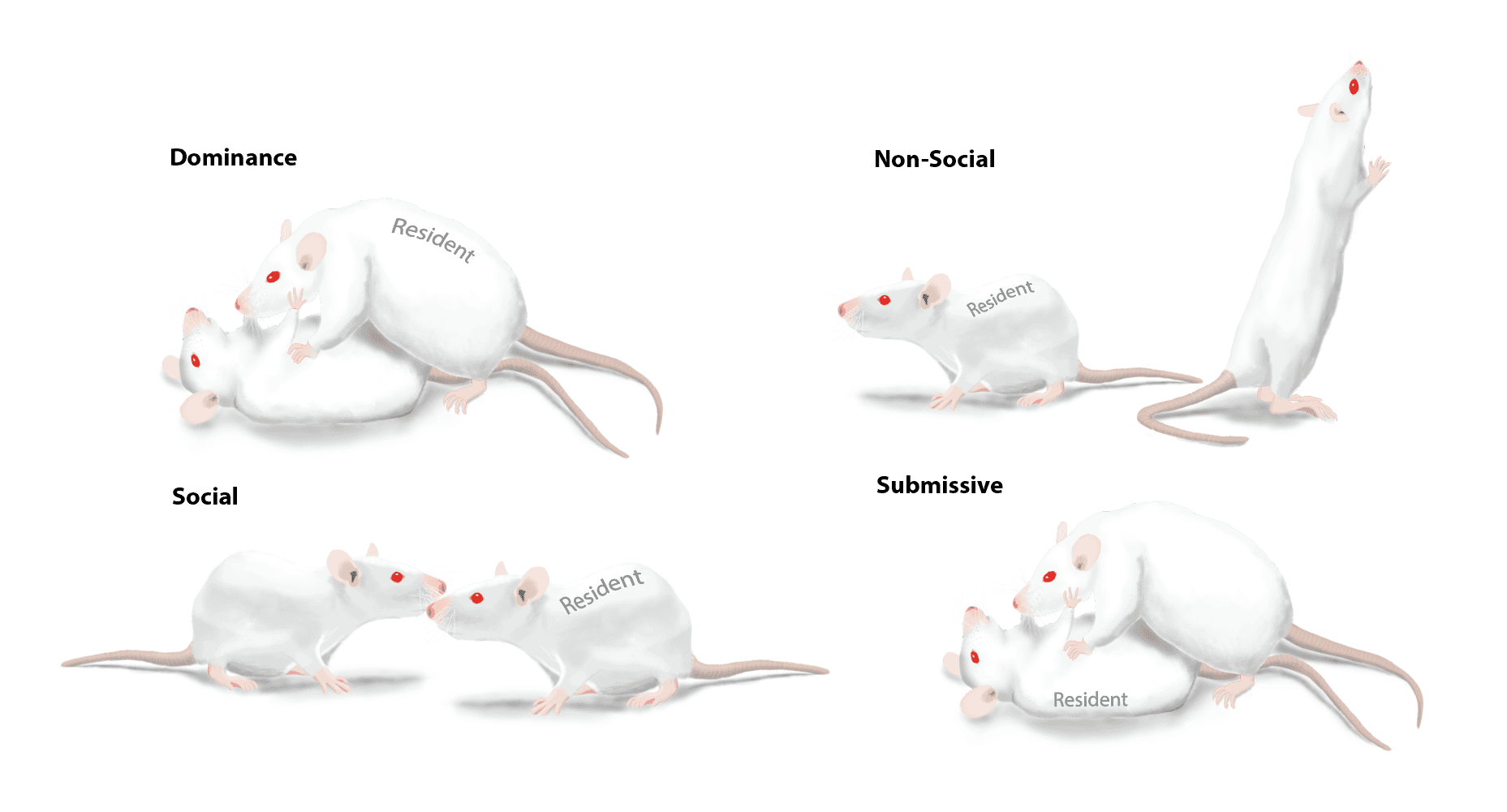
Illustrations of dominance, social, non-social and submissive rat behaviours

Pain in a social world

Social & Observational Pain

Pain and social behaviour influence one another. I study this bidirectional relationship: how social interactions and observing others in pain can shape our own pain, and how persistent pain can in turn alter social behaviour and neural activity.

How do social experience and persistent pain shape one another?

Explore this research programme
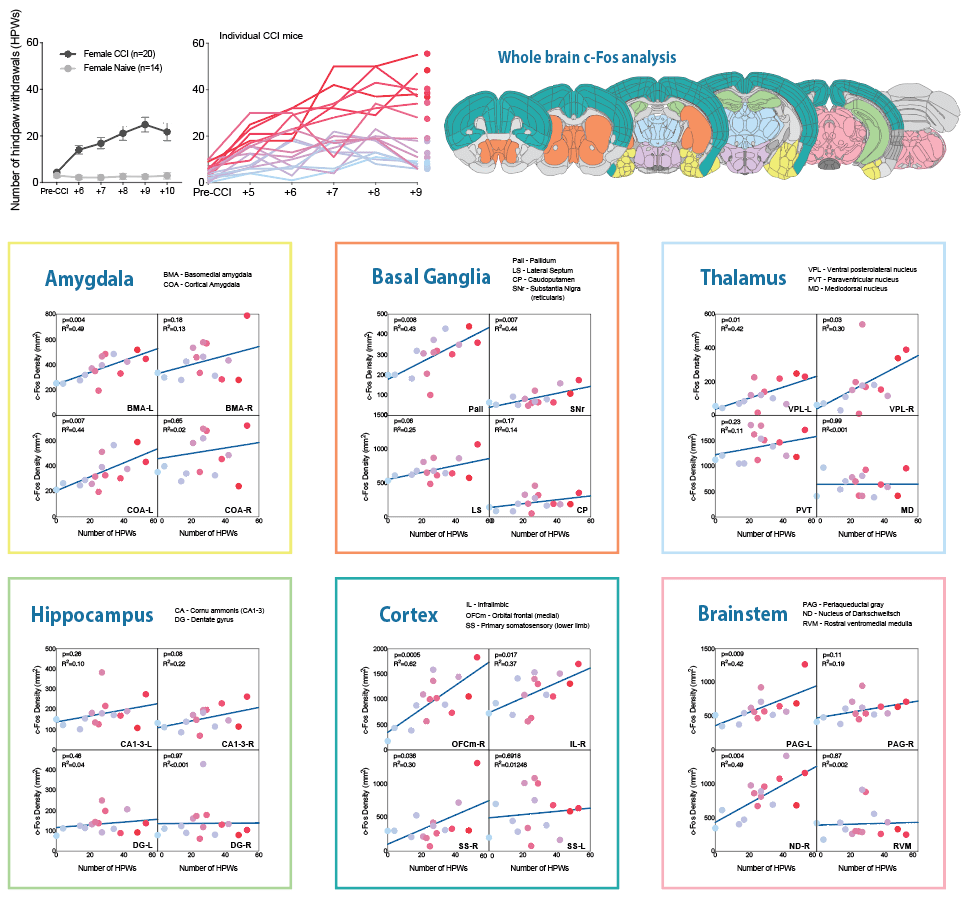
Whole-brain c-Fos analysis relating individual pain behaviour to regional brain activity

Mechanisms and individual variation

Chronic Pain: Mechanisms & Individual Differences

Chronic pain varies substantially between individuals. I study the neural, immune, endocrine and behavioural changes associated with persistent pain, and how biological variation helps explain why pain develops, persists or resolves differently between individuals.

How does nerve injury reshape neural, immune, endocrine and behavioural systems — and why do those changes differ between individuals?

Explore this research programme