NeuroBriefer

A self-funded research tool I built to make the expanding neuroscience literature easier to discover, prioritise and keep track of.
What NeuroBriefer is
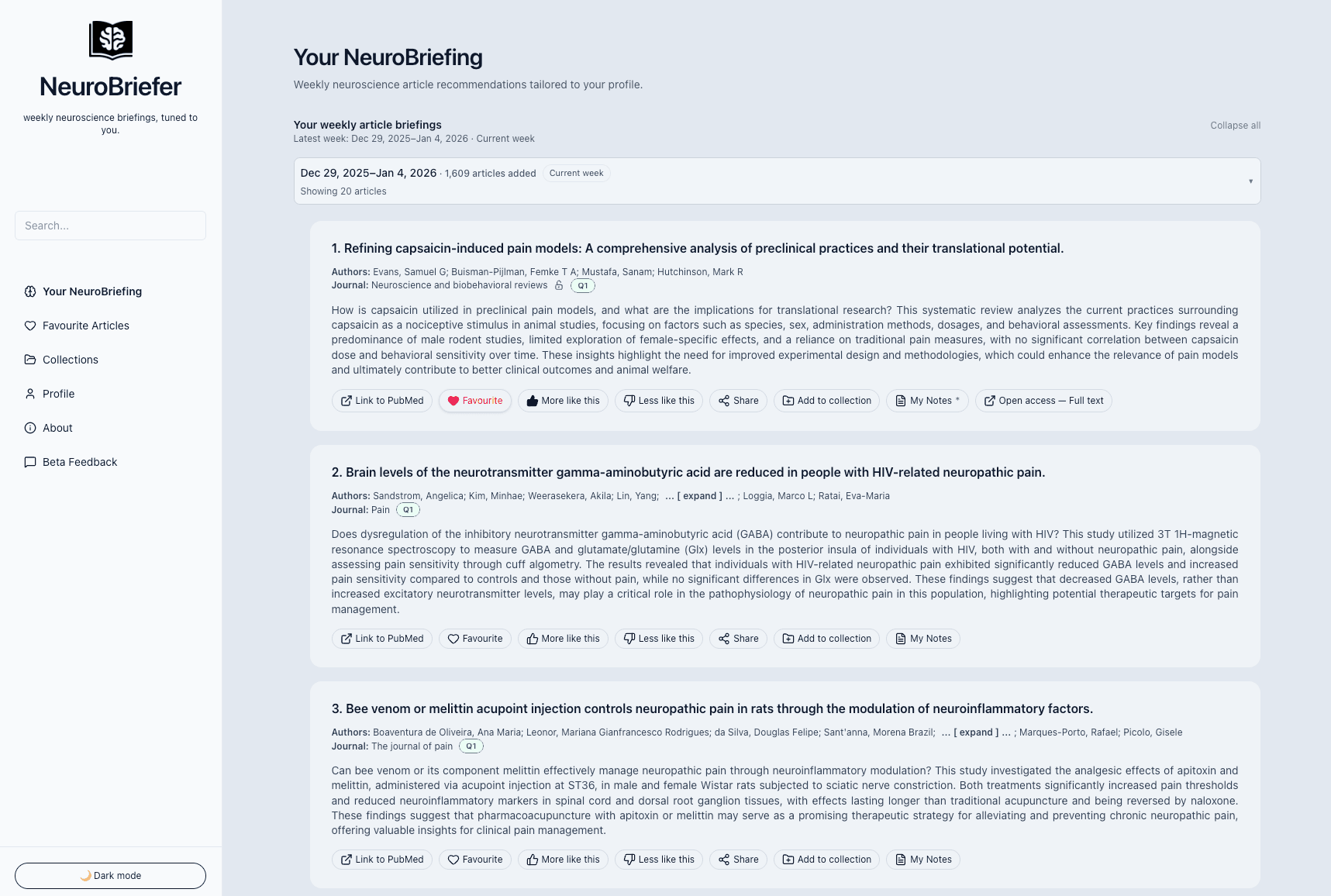
NeuroBriefer is a free platform that creates personalised weekly neuroscience research briefings. Researchers define the topics, concepts and methods they care about, and newly published papers are ranked against those interests.
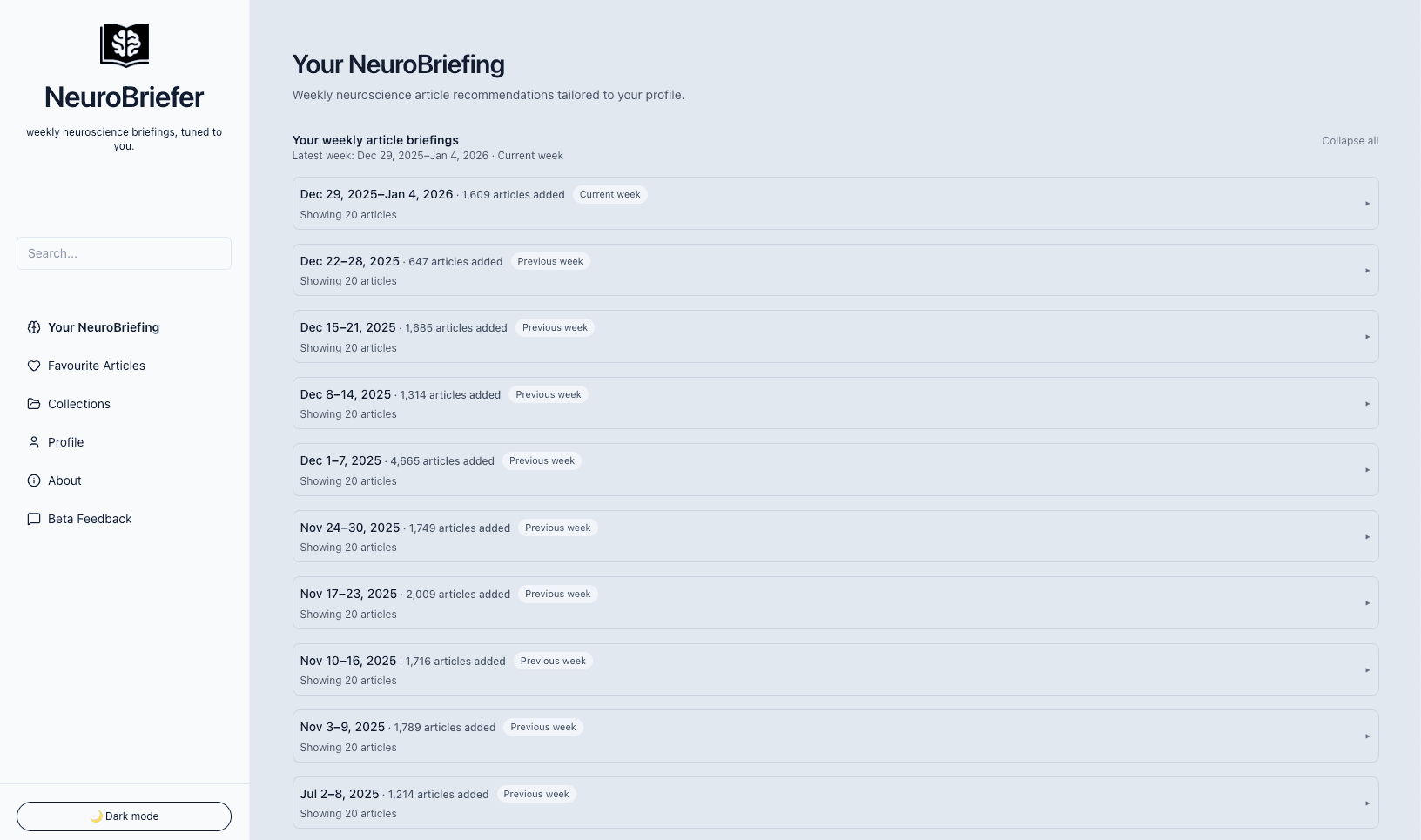
The highest-ranked papers are delivered in a weekly email briefing and remain available in a personal research library, where they can be revisited, saved and organised.
I think of it primarily as a discovery and prioritisation tool: a way to decide which new papers are most worth your attention. It is not intended to replace reading the original research or performing a systematic literature search.
Why I built it
NeuroBriefer grew out of a problem I kept running into in my own research: there were simply too many new papers to keep up with across pain, neuroscience and the methods I was using.
PubMed searches, alerts and newsletters were useful, but they still left me doing much of the same work each week — scanning large numbers of papers to decide which ones were actually relevant to what I was working on.
I wanted something that could start from a researcher's own interests and help prioritise the literature around them. The aim was not to automate scientific judgement, but to reduce the time spent searching and sorting before the real work of reading and interpreting begins.
The research-workflow problem
The literature problem is not simply finding papers; it is deciding which of the hundreds of new papers appearing each week are relevant enough to read. NeuroBriefer helps with that first layer of triage.
Because recommendations are based on a researcher's own interests rather than a fixed-topic newsletter, the same system can support people working in very different areas of neuroscience. The brief summaries are there to help with that initial decision. The original paper remains the source that matters.
How it works
Describe your research interests
Researchers describe the topics, concepts and methods they care about.
Match and rank new papers
New neuroscience papers are matched and ranked against those interests.
Receive and retain the briefing
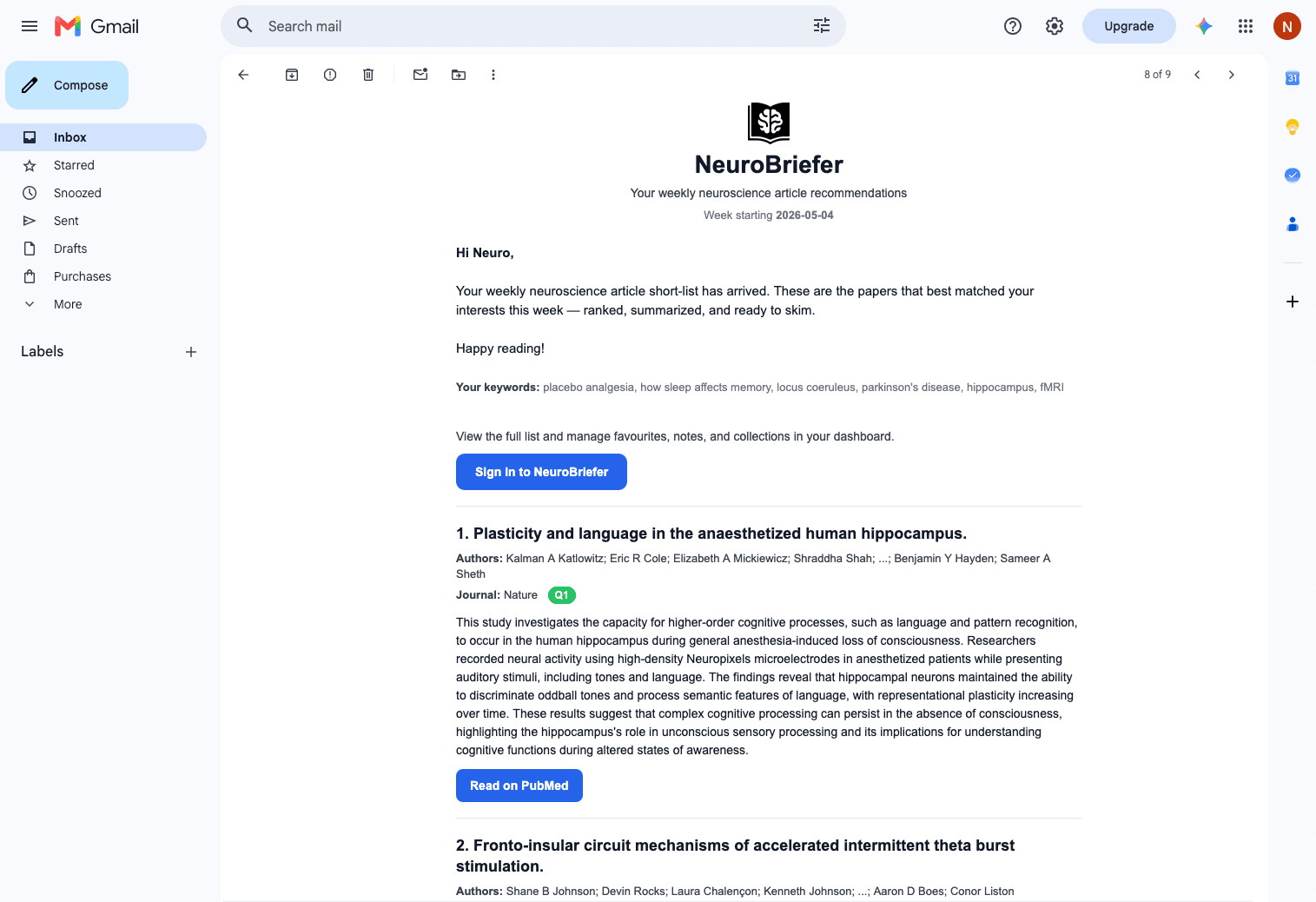
The highest-ranked papers arrive in a weekly email briefing and remain available in a personal research library on the web.
Where the project is now
NeuroBriefer is currently self-funded and remains free to use. Since making it publicly available, more than 400 researchers from around the world have signed up.
I continue to develop it alongside my research, using feedback from researchers to improve how papers are ranked, summarised and organised. For me, the project is also an ongoing experiment in how computational tools can support scientific work without trying to replace the judgement of the scientist using them.
It fits within my broader interest in improving how scientists discover, prioritise and organise research as the literature continues to expand.