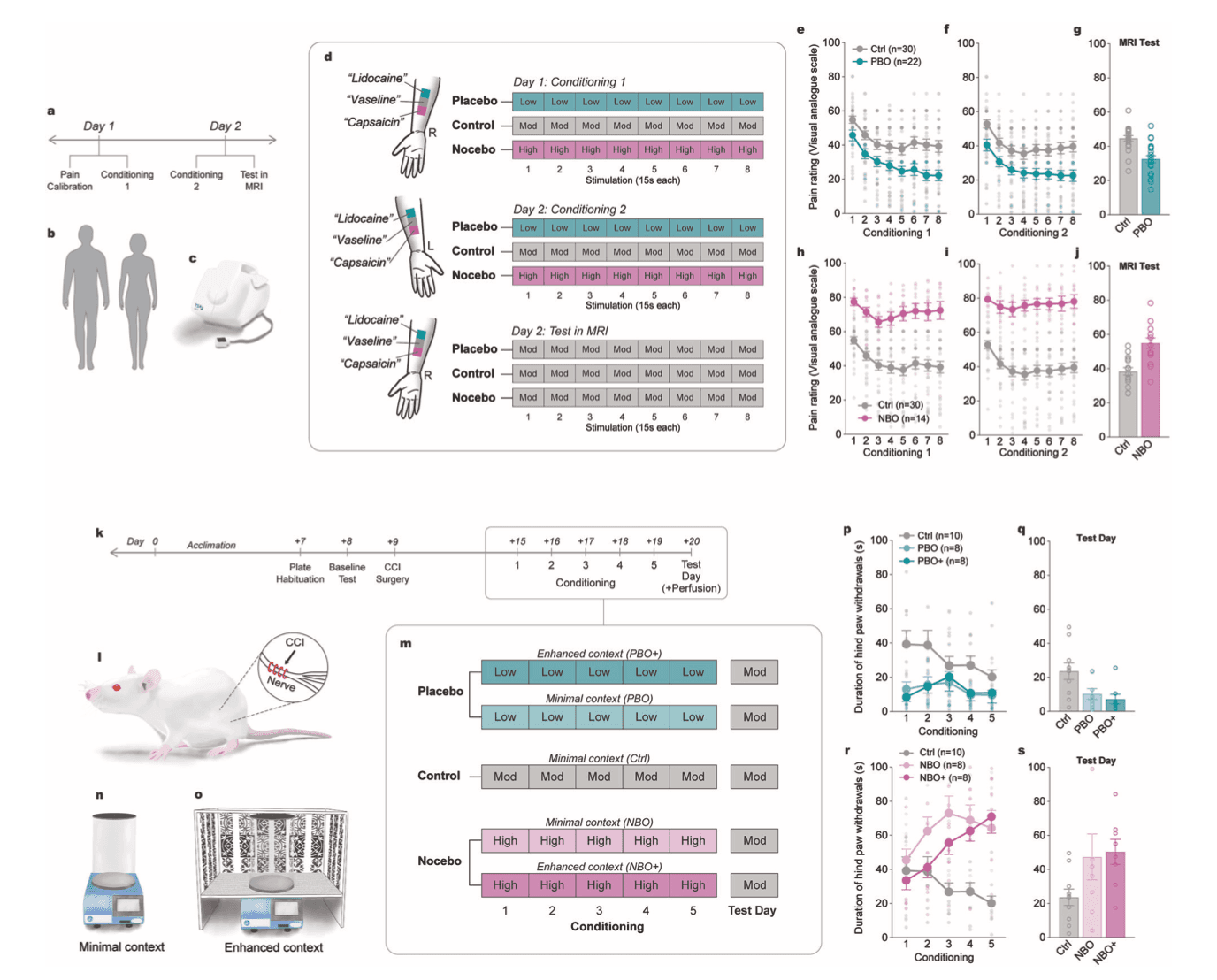
I study how expectations, learning and context alter pain, using complementary experiments in rodents and humans. A major goal is to identify the neural mechanisms that are conserved across species — and where they differ.
Read moreDamien Boorman, PhD
CIHR Postdoctoral Fellow · University of Toronto
Neuroscience of pain and placebo
Understanding how the brain shapes pain
I study how injury, expectation, learning and context shape pain, and how these effects are represented across brain-wide networks and defined neural circuits.

Research
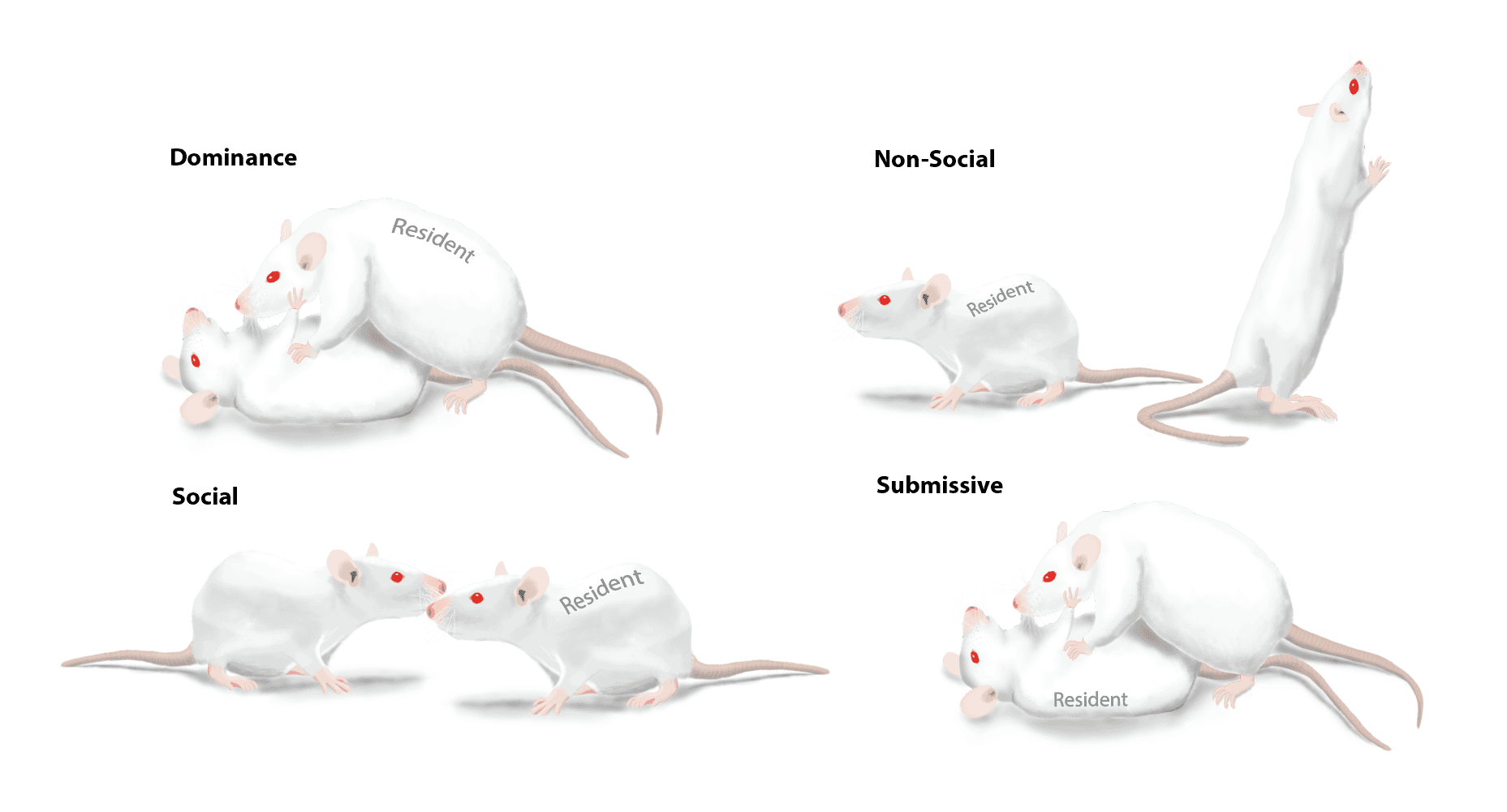
Pain and social behaviour influence one another. I study this bidirectional relationship: how social interactions and observing others in pain can shape our own pain, and how persistent pain can in turn alter social behaviour and neural activity.
Read more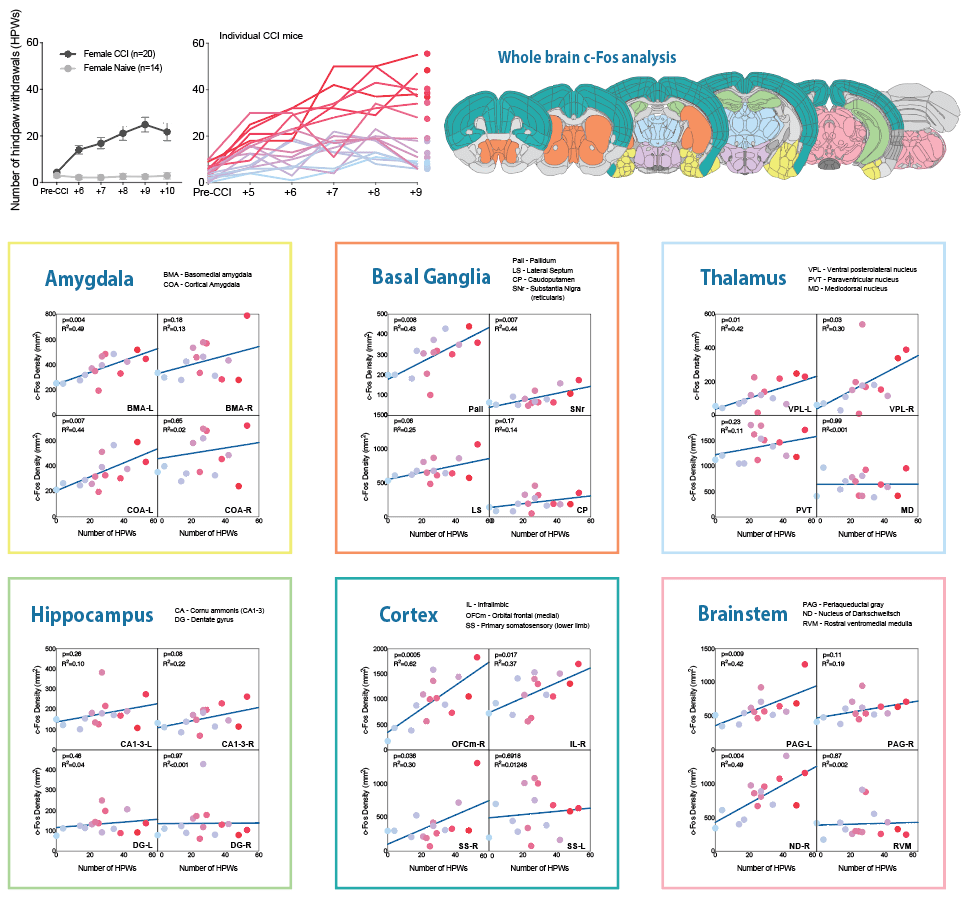
Chronic pain varies substantially between individuals. I study the neural, immune, endocrine and behavioural changes associated with persistent pain, and how biological variation helps explain why pain develops, persists or resolves differently between individuals.
Read moreCurrent Projects & Interests
Alongside my established research questions, I am learning and using new approaches to better link behaviour, neural activity and other biological measures in chronic pain.
Miniscopes / calcium imaging
I am bringing miniscope calcium imaging into our chronic pain research to examine how neural activity changes alongside pain-related behaviour. By recording neural populations during freely moving behaviour, we can begin to connect circuit dynamics with individual differences in pain expression and adaptation over time.
Keypoint-MoSeq / computational behaviour
Keypoint-MoSeq combines pose estimation with unsupervised modelling to identify recurring behavioural motifs directly from video. We are applying it to longitudinal pain and social-behaviour experiments to move beyond single summary measures and ask how the structure of naturalistic behaviour changes with injury, pain state and treatment.
Ultrasonic vocalisations (USVs)
I am exploring ultrasonic vocalisations as an additional measure of affective and social behaviour, using analysis tools including DeepSqueak alongside established behavioural assays.
Whole-brain mapping / c-Fos, microglia & circuit tracing
I use atlas-aligned whole-brain mapping to investigate distributed neural systems, including c-Fos activity mapping, microglial analyses and circuit tracing. These approaches allow brain-wide patterns to be related to individual variation in pain behaviour and more focused circuit-level questions.
Latest publications
View all publications →Poulson SJ, Skvortsova A, Zahra FT, Boorman DC, Karimi SA, Paz LV, Cui W, Mandatori A, Burek J, Siddiqi Z, Fazili M, Gami SR, Morgan OB, Di Maria M, Dinh A, Liang L, Contofalsky R, Mogil JS, Martin LJ (2026).
Cholecystokinin input from the anterior cingulate cortex to the lateral periaqueductal gray mediates nocebo pain behavior in mice
Nature Communications 17:6637 · 10.1038/s41467-026-73266-y.
NeuroBriefer
I founded NeuroBriefer, a free platform that creates personalized neuroscience literature briefings from PubMed and helps researchers organize relevant papers.
Visit NeuroBriefer
NeuroBriefer
Keeping you up to date with the latest neuroscience research